Eco-crossings: testing how to boost biodiversity on offshore grids
 ©TenneT, Dutch Maritime Productions
 ©TenneT, Dutch Maritime Productions
 ©TenneT, Dutch Maritime Productions
 ©TenneT, Dutch Maritime Productions
 ©TenneT, Dutch Maritime Productions
Objectives
To understand whether different materials used at offshore cable crossings can boost marine biodiversity, particularly for the European flat oyster and other reef associated species.
Short description
With every installed grid connection, new cables often cross existing offshore infrastructure – this intersection is called cable-crossing. In these cases, sprinkler layers (granite rock piles) are installed to prevent the damage and erosion of cables.
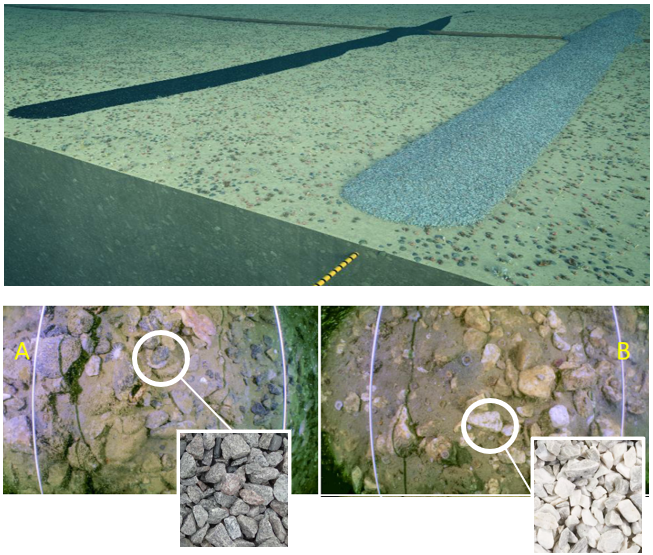
In 2021, TenneT, the transmission system operator in the Netherlands, started a research project, aiming to understand if using calcareous substrate, such as marble, instead of standard granite at these cable-crossings could provide a suitable habitat for bivalves (mollusc with two hard shells), particularly the European native flat oyster, and other reef-associated species. The expected outcome was that the settlement of these species could lead to higher biodiversity in the area. The research project was carried out at the Holland Kust Zuid Wind Farm The Holland Kust Zuid Wind Farm is in the North Sea, off the coast of Zuid-Holland in the Netherlands. It lies between 18-36 km offshore and it comprised four sites (Sites I – IV). The total installed capacity is 1.5 GW, with 139 turbines. This equals the consumption of 1.5 million households. . It included a comparative analysis using different materials: three cable-crossings were installed with a standard granite sprinkler layer, and another three cable-crossing were installed with an adapted marble one. These sprinkler layers (consisting of small rocks, D90 ≤80 mm) were installed on top of the armour layer, following Dutch legislation.
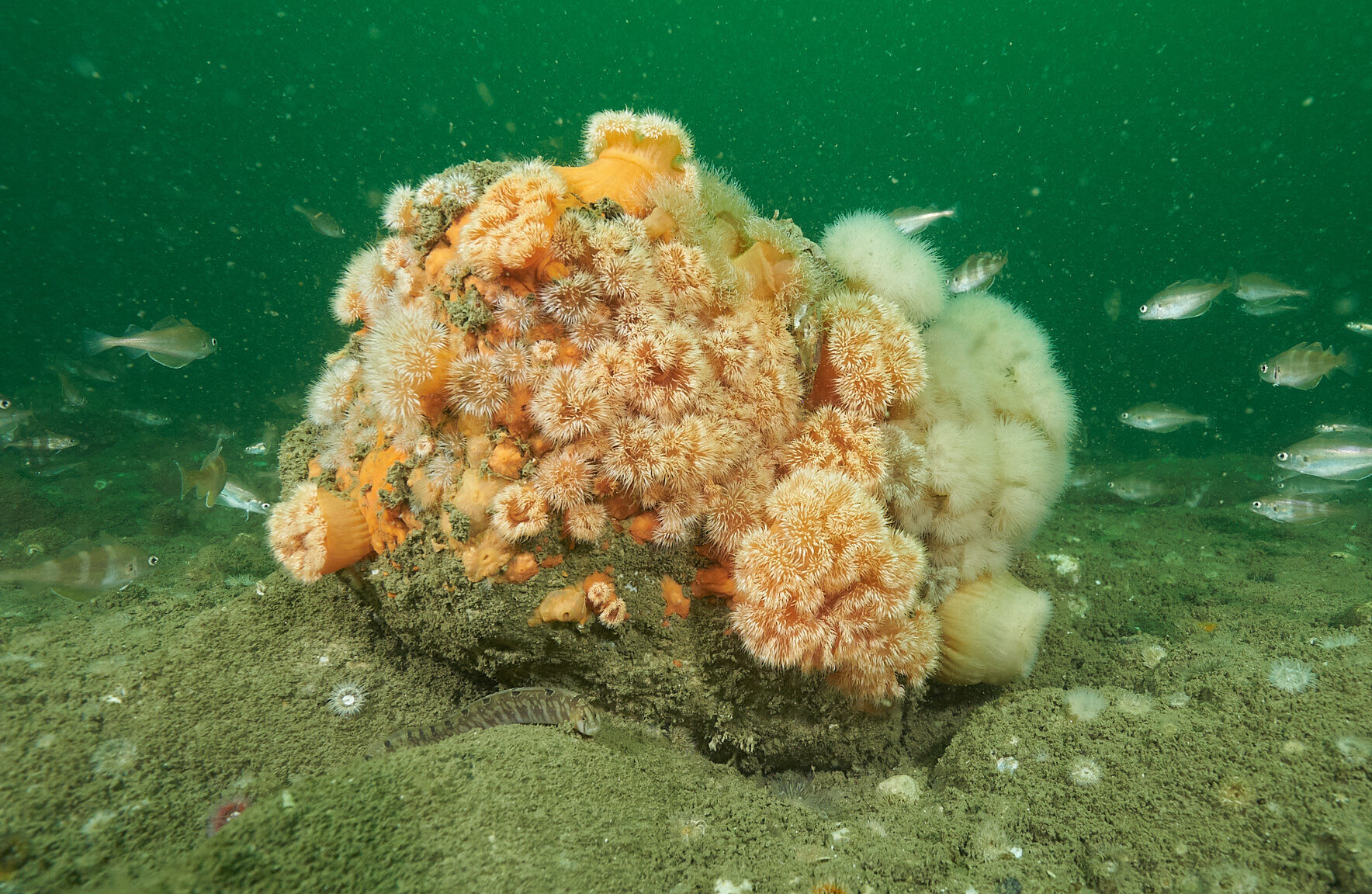
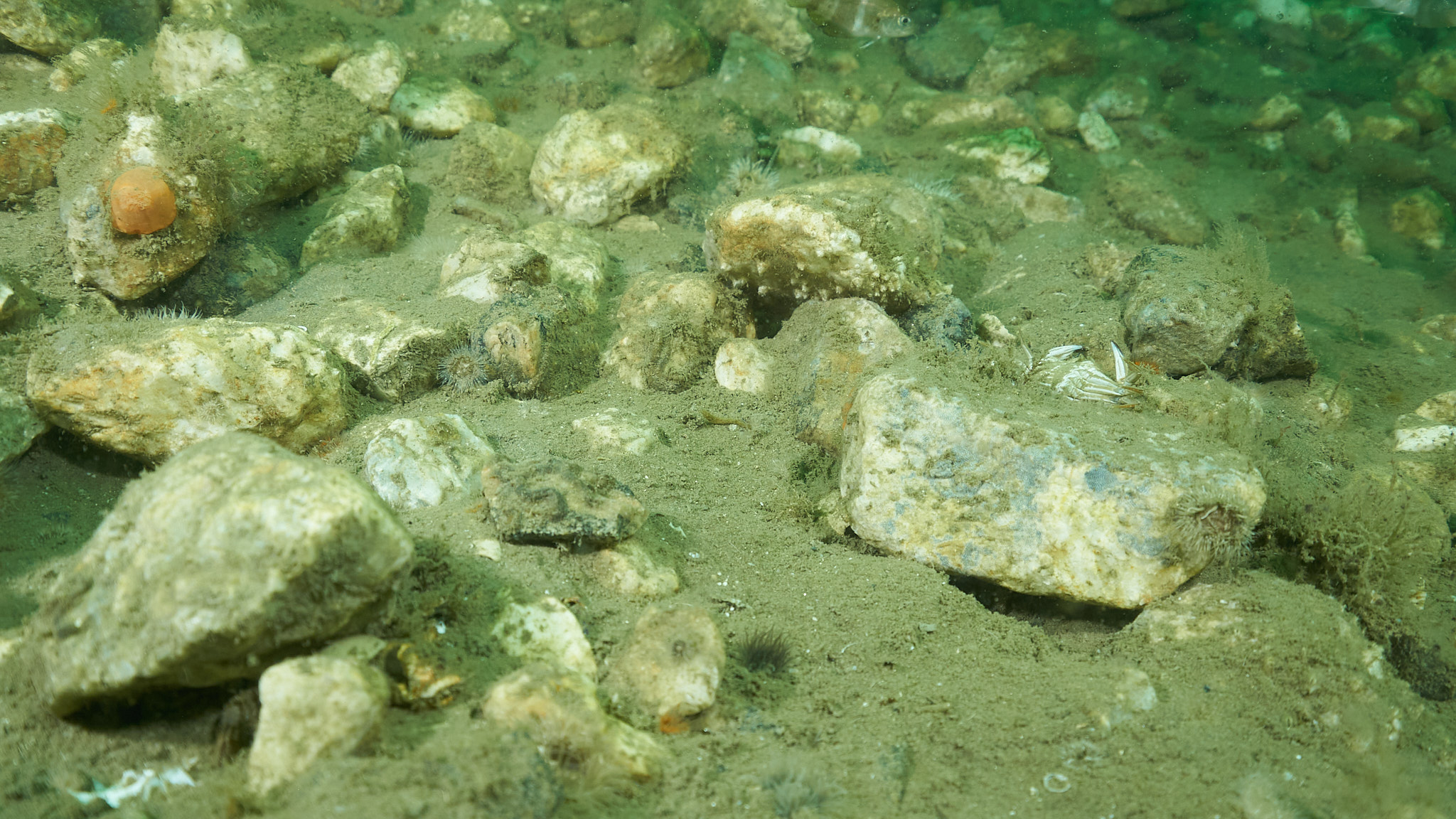
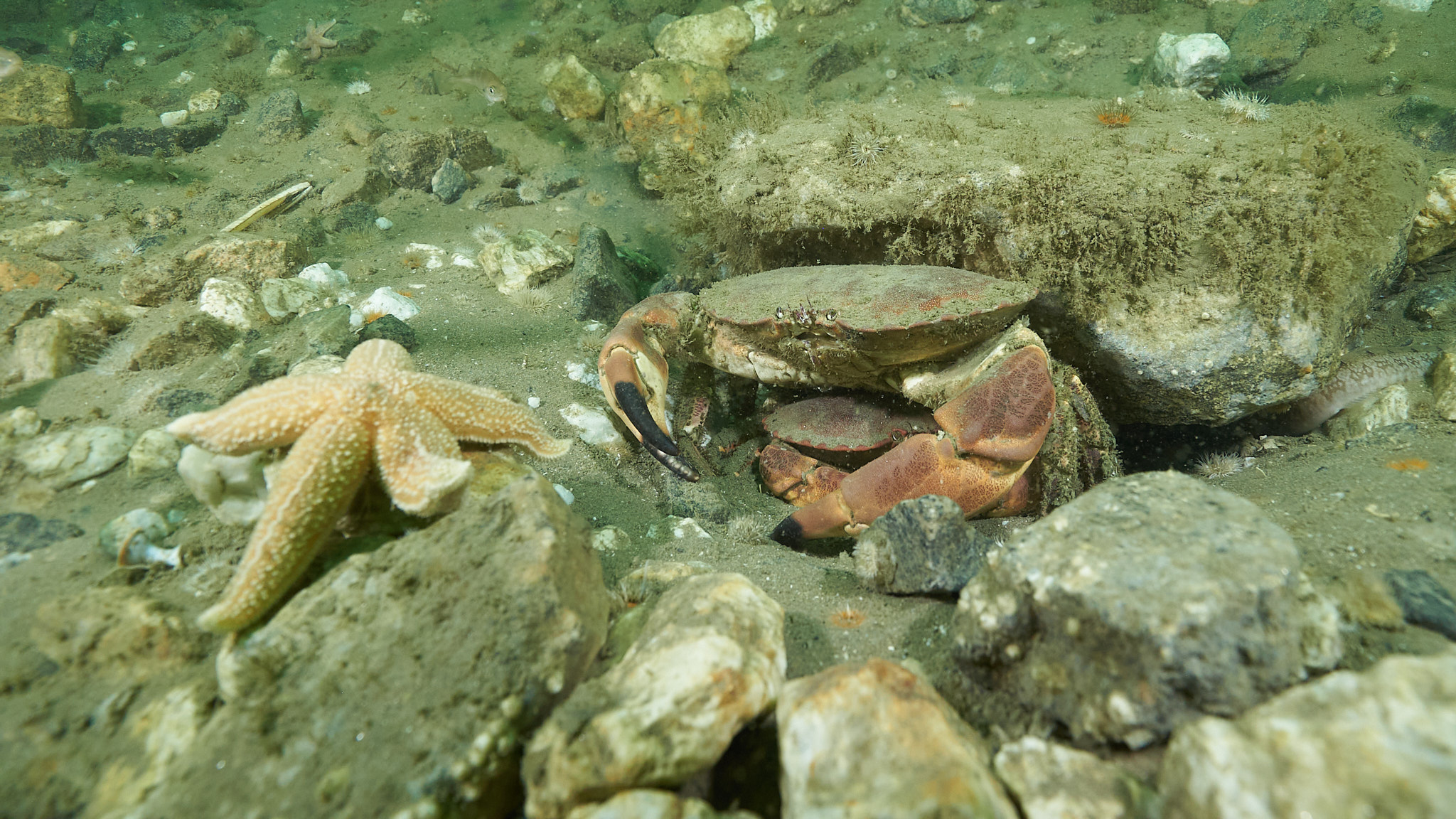
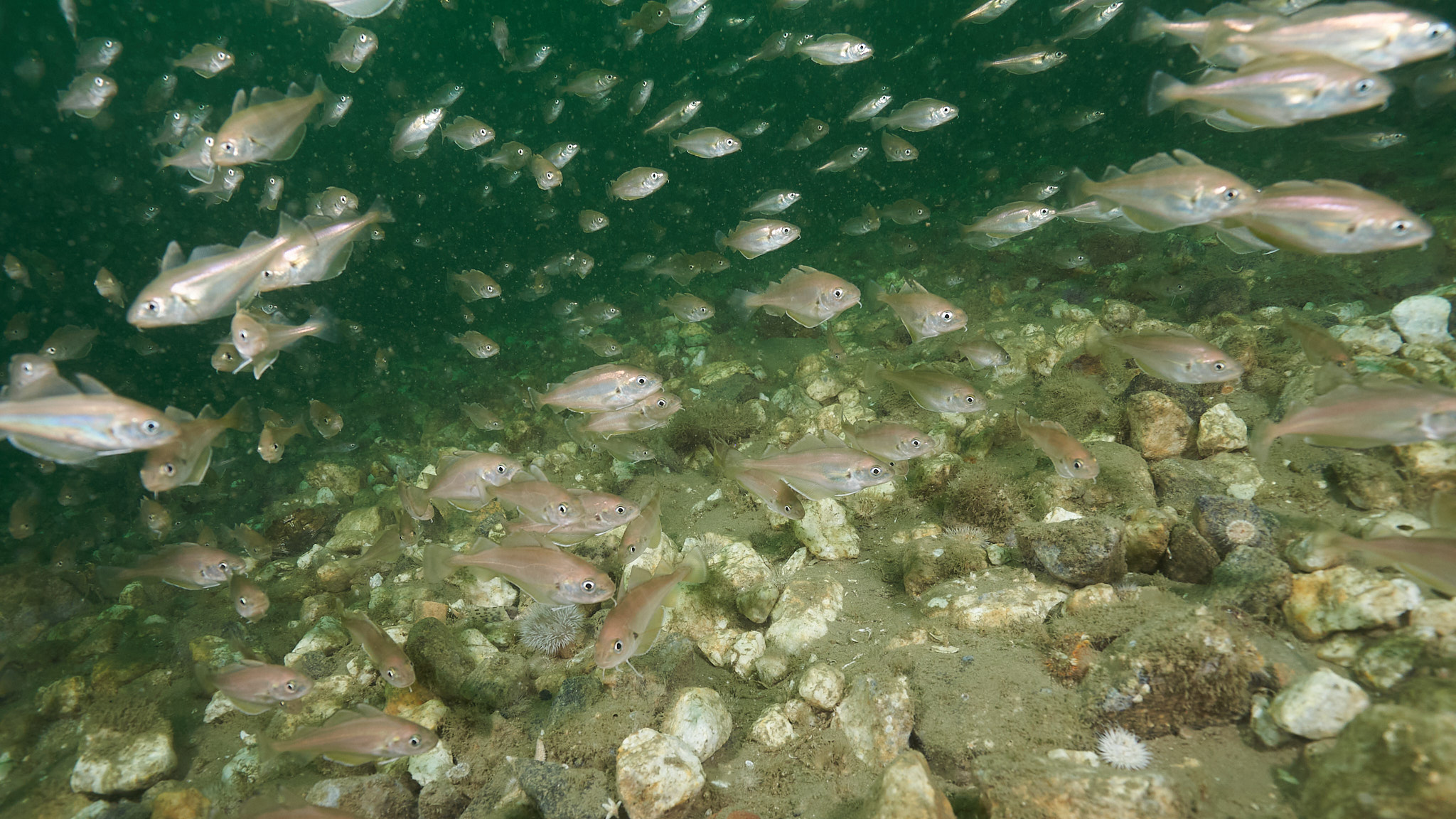
Environmental monitoring was conducted in 2022, 2023, and 2024 with Dropcam surveys and eDNA analysis to investigate the species richness in the area. Species found at the cable-crossings have been observed around hard substrates in other research projects in the North Sea, such as rocky reefs and scour protection layers around offshore wind turbines. In terms of species richness, our monitoring showed a higher benthic biodiversity on the hard substrates of the cable crossings than in the surrounding sand, however, there was slightly less species settlement on the calcareous-rich sprinkler layer in comparison to the standard granite one.
The monitoring showed, however, that the sprinkler layer, regardless of the substrate type, does not provide a steady substrate for species to settle. The stone size proved to be a more critical factor for habitat development. The armour layer itself, combined with active flat-oyster restoration, could potentially provide all necessary ingredients for the development of a stable benthic community, such as availability and stability of hard substrate, surface complexity, and the existence of areas sheltered from high flow velocities. This will be tested with a pilot project on oyster restoration at TenneT’s cable-crossings next year.
TenneT is responsible for developing and operating the Dutch offshore electricity grid infrastructure and aims to develop it as nature inclusive as reasonably possible. This in line with the Netherlands’ Development Framework for Offshore Wind Energy, and TenneT’s Corporate Social Responsibility (CSR) goals.
Learn more
1+2+3+4(a)+5
Information updated on: 8 December 2025