Droppable Oyster Structures (DOS) at Borssele Offshore Wind Farm 1&2
 ©Van Oord
 ©Van Oord
Objectives
To test the cost-effectiveness and ease of installation of the Droppable Oyster Structure (DOS) method in establishing oyster reefs around an offshore wind farm.
Short description
Offshore wind farms in the Netherlands provide a great opportunity to restore marine ecosystems, as they are located in relatively undisturbed waters and no commercial fishing is allowed.
Oyster reefs improve water quality, can create habitats for other species to forage and seek shelter, and offer an opportunity to enhance the marine ecosystems of the North Sea. As this sea basin consists primarily of soft sediment, loose oysters would become buried in the sand if introduced directly. For this reason, different types of structures are used to facilitate oyster deployment.
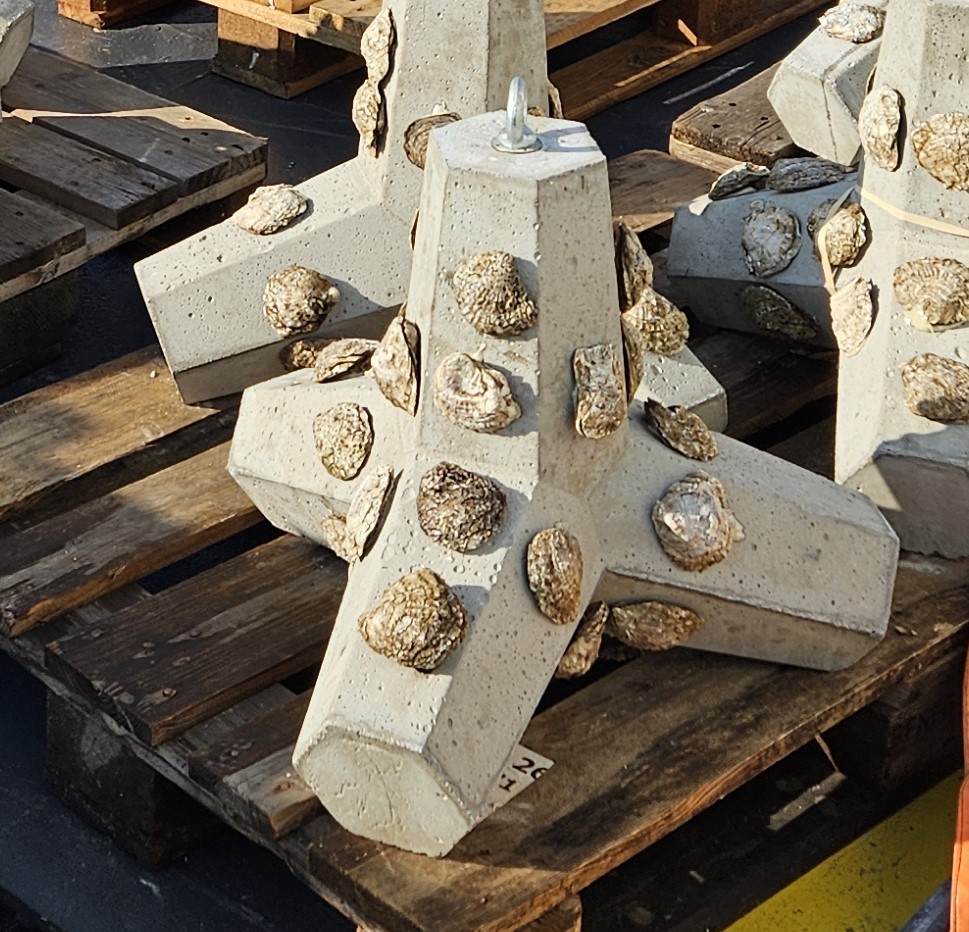
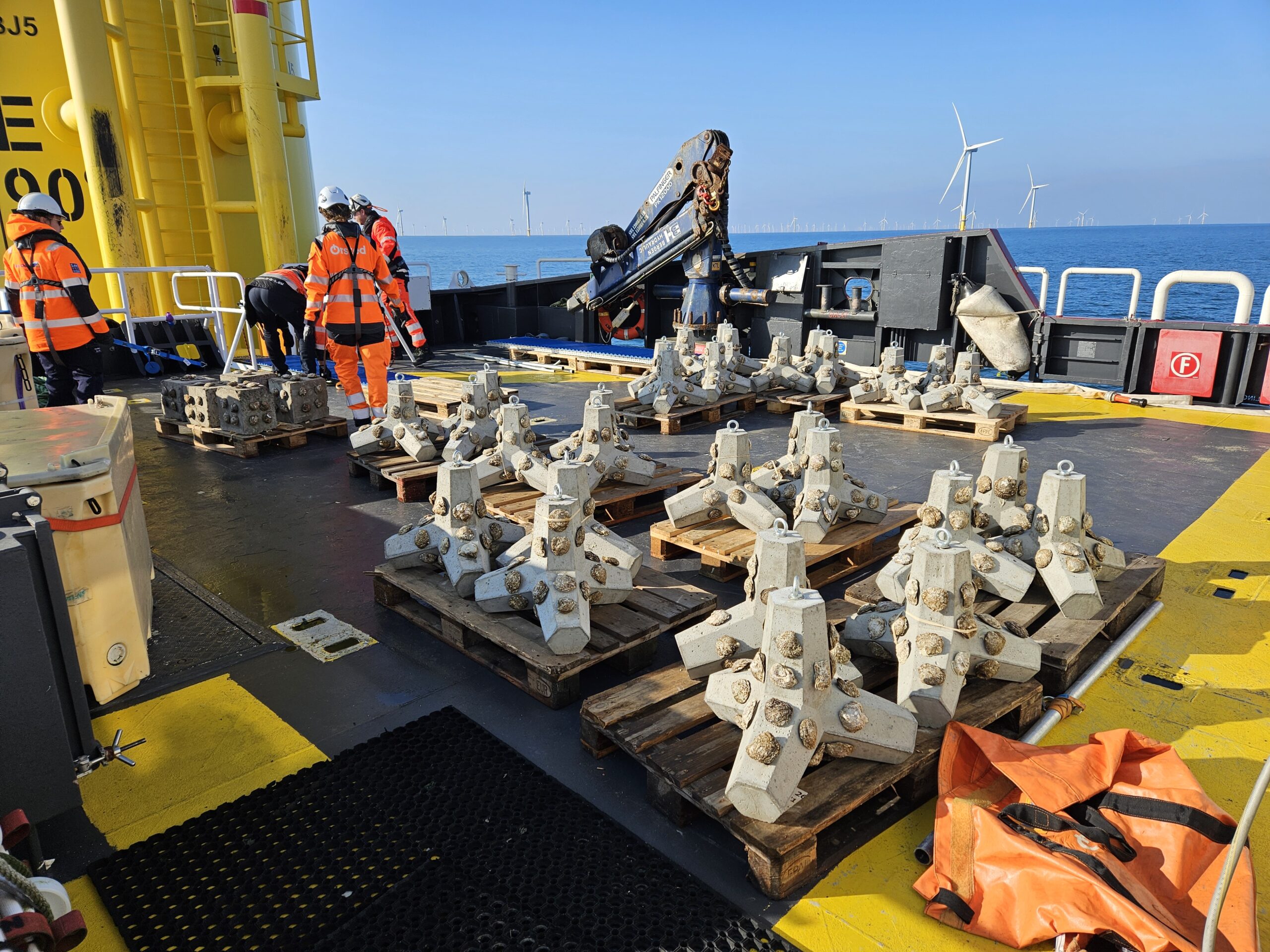
In October 2024, Van Oord – in collaboration with the wind developer Ørsted – deployed an innovative Droppable Oyster Structures (DOS) design at two monopile locations of the Borssele Offshore Wind Farm 1&2Borssele 1&2 Offshore Wind Farm is in the Dutch part of the North Sea, 23 km from shore. It comprises 94 turbines and a total capacity of 752 MW in the Netherlands. The light weight, star-shaped structures are smaller than those used in previous pilots, can be carried by two people, and have live oysters attached to them. With the support of these structures, a total of 2,000 oysters were introduced throughout the Dutch North Sea, with the overall aim of forming new oyster reefs.
Due to the unique, portable design of the DOS, the structures can simply be dropped from a small vessel rather than carefully placed on the seabed using a crane, which was the common practice for larger structures. This feature allowed the Van Oord team to install the DOS during maintenance activities, making use of the Crew Transfer Vessel (CTV) during its idle periods, simplifying the logistics, and improving the method’s cost efficiency.
A monitoring program has been put in place to provide insights on the effectiveness of the design, as well as the establishment and growth of oyster reefs across the sites used. In a survey performed one month after deployment, the team collected video footage using a remotely operated vehicle (ROV). While it is too early to determine the full ecological impact, initial footage shows that the structures landed as expected and remain undamaged after the deployment. More importantly, the oysters appear to be healthy, and marine life has been observed on and around the DOS, including fish, crabs, algae and anemones. Further monitoring is planned to provide more in-depth insight into the impact of this pilot project and the effectiveness of the method, with a second survey scheduled for Q4 2026. Depending on these findings, a final survey around 2032 is also being explored.